

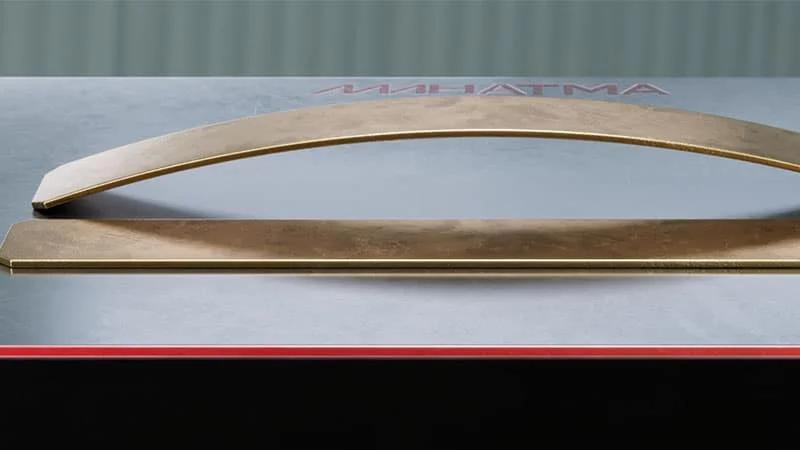
Flattening Machine technology plays an important role in modern metal processing, where accuracy, consistency, and surface quality are essential. In industrial production, metal sheets, plates, strips, and other materials may develop bends, waves, or uneven sections during manufacturing, handling, or transportation. A reliable flattening solution helps correct these imperfections and prepares the material for further processing. MAHATMA GROUP provides industrial machinery solutions designed to support efficient and consistent metalworking operations.
Understanding the Purpose of a Flattening Machine
A Flattening Machine is industrial equipment used to reduce unwanted bends, curves, waves, and other distortions in metal materials. The machine generally works by applying controlled pressure through a series of rollers. As the material passes through these rollers, its shape is gradually corrected to achieve a flatter and more uniform form.
This process is especially useful when dimensional accuracy is important. Materials with an uneven surface can create problems during cutting, welding, stamping, forming, or assembly. By improving flatness before the next production stage, manufacturers can achieve smoother workflows and reduce material-related processing issues.
How Does the Flattening Process Work?
The operating principle is based on controlled mechanical pressure. Metal material enters the machine and moves through multiple rollers arranged according to the required processing conditions. These rollers apply pressure at different points, gradually reducing deformation and improving the material's overall flatness.
Machine settings can be adjusted according to factors such as material thickness, width, strength, and production requirements. Proper adjustment is important because excessive pressure may affect the material, while insufficient pressure may not provide the desired result.
Modern industrial systems can also be integrated into production lines, allowing manufacturers to maintain a continuous workflow while improving processing consistency.
Key Benefits for Industrial Production
One of the main advantages of a Flattening Machine is improved material consistency. A flatter material surface can make subsequent manufacturing processes more predictable and efficient.
Another benefit is improved dimensional control. When metal sheets or strips have fewer distortions, cutting and forming operations can be performed with greater consistency. This can be particularly valuable in industries where components need to meet defined dimensional requirements.
Flattening equipment can also contribute to production efficiency. By correcting material imperfections during the processing stage, manufacturers can reduce the need for repeated manual adjustments. This helps operators maintain a more streamlined production process.
Material quality is another important consideration. Proper flattening can help prepare metal surfaces for processes such as fabrication, machining, welding, and finishing. The result is a more suitable input material for downstream operations.
Choosing the Right Industrial Equipment
Selecting suitable flattening equipment depends on several factors. Manufacturers should consider the type of metal being processed, material thickness, working width, required production speed, and desired level of flatness.
The number and arrangement of rollers can influence the flattening process. Machine construction, adjustment mechanisms, automation features, and operating controls are also important when evaluating equipment for an industrial application.
A suitable machine should match the actual production requirements rather than simply focusing on capacity. Understanding the material specifications and expected production volume can help businesses select equipment that fits their manufacturing workflow.
Applications Across Different Industries
A Flattening Machine can be useful in a wide range of metalworking environments. It may be applied to metal sheets, strips, plates, and other materials that require improved flatness before further processing.
Industries involved in fabrication, engineering, automotive components, construction equipment, machinery manufacturing, and general metal processing can benefit from reliable flattening technology. The exact application depends on the material characteristics and production requirements.
For manufacturers handling large volumes of metal, consistent material preparation can make an important difference to overall workflow. Integrating flattening equipment into an existing production line may also help reduce unnecessary handling between processing stages.
Why Work With MAHATMA GROUP?
MAHATMA GROUP focuses on providing industrial machinery solutions for different metal processing requirements. Businesses looking for reliable equipment can evaluate machinery based on their material specifications, production objectives, and operational needs.
A well-selected Flattening Machine can support better material preparation, consistent processing, and smoother downstream manufacturing operations. Before investing, manufacturers should review technical specifications and ensure that the equipment is appropriate for their particular application.
Conclusion
Accurate material preparation is an important part of efficient metal manufacturing. A suitable flattening system can help correct material deformation, improve consistency, and prepare metal for subsequent production processes. With the right specifications and machine configuration, manufacturers can create a more controlled and efficient workflow.
MAHATMA GROUP offers industrial machinery solutions for businesses seeking dependable metal processing equipment. Evaluating material type, dimensions, production volume, and required flatness can help manufacturers identify a solution that supports their long-term production goals.